If you’ve started apartment hunting in Nashville, you’ve probably noticed the price tags jump around a lot depending on where you look. That’s not you misreading listings — it’s just how spread out this market really is. Here’s a realistic breakdown to help you set expectations before you start touring.
Table of Contents
Citywide averages
Across Nashville, studio apartments generally run from the mid-$1,400s to $1,800 a month, one-bedrooms land somewhere between $1,500 and $1,900, and two-bedrooms typically fall between $1,900 and $2,400. Three-bedroom rentals push past $2,400 in most cases, especially if they’re houses or townhomes rather than apartment-complex units.
Those ranges are wide on purpose. Nashville doesn’t have one rental market — it has a dozen smaller ones stitched together, and where you land in that range depends almost entirely on neighborhood and building age.
What drives the price up
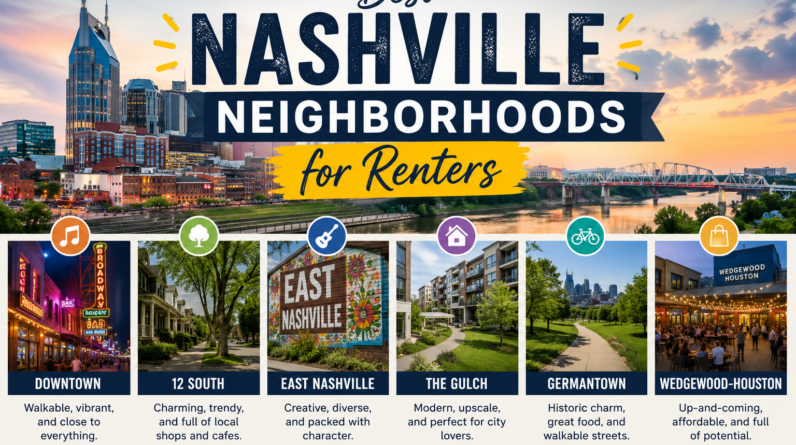
Downtown, the Gulch, and Midtown/Vanderbilt-adjacent buildings sit at the top of the market. You’re paying for walkability, newer construction, and amenities like rooftop pools, fitness centers, and parking garages. It’s not unusual to see one-bedrooms in these areas priced well above $2,000.
Newer construction anywhere in the city tends to command a premium too, even outside the urban core. If a building went up in the last five years, expect to pay more than you would for a similar-sized unit in an older complex a few miles away.
Where renters find more breathing room
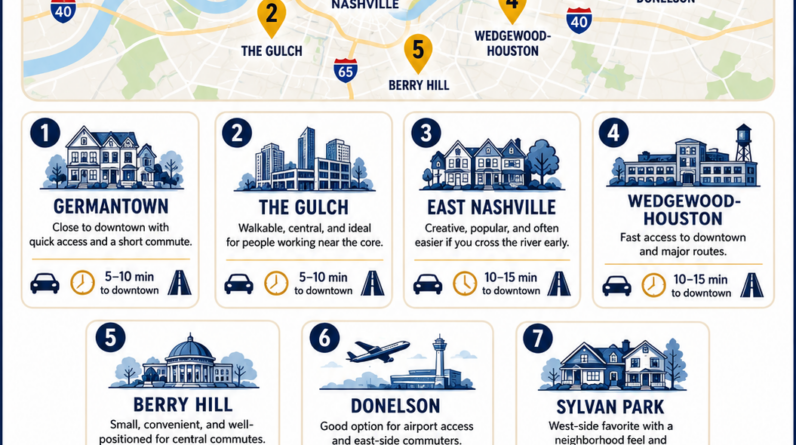
Areas like Madison, Antioch, Donelson, and parts of Southeast Nashville consistently post lower averages — often a few hundred dollars less per month than the citywide number for a comparable unit. These neighborhoods tend to have older apartment stock and a longer commute into downtown, which is exactly why they cost less. If your budget is tight, these are worth touring first.
Don’t skip the fine print on “specials”
Nashville’s rental market moves through cycles of concessions — a free month, waived admin fees, discounted parking — especially at larger complexes trying to fill vacancies. A unit that looks $150 over your budget on paper might actually pencil out once a move-in special is applied. Just remember: most property managers still qualify you based on the full market rent, not the discounted rate, so a great special won’t help you qualify for something outside your income bracket.
Budgeting rule of thumb
A common guideline is to keep rent at or under 30% of your gross monthly income. In a market where the citywide average sits somewhere in the high $1,700s to low $1,900s, that generally means you’d want household income in the high $70,000s to comfortably afford an average one- or two-bedroom without stretching your budget thin.
The bottom line
Nashville rent isn’t one number — it’s a range that shifts fast depending on neighborhood, building age, and what specials happen to be running the week you’re looking. The best move is to nail down your must-haves (commute distance, in-unit laundry, pet policy) before you start comparing prices, so you’re not chasing the lowest number at the expense of what actually makes an apartment livable for you.